
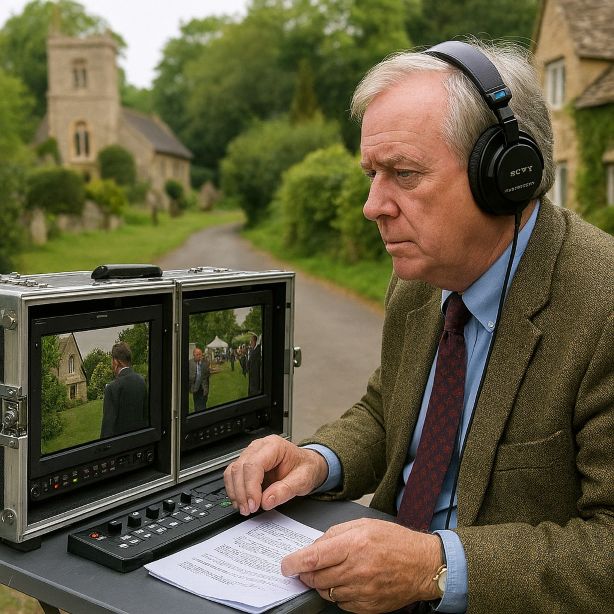
For many viewers, Midsomer Murders is more than a detective series. It is a world—lush, eccentric, timeless—where pastoral beauty and darkly comic mayhem coexist in perfect balance. At the heart of that world, shaping its tone, texture, and unmistakable identity, stood producer Brian True-May. His tenure on the series did not merely guide Midsomer Murders; it defined it.
A Vision Rooted in English Pastoral Tradition
True-May understood something essential: Midsomer Murders was never meant to be just another crime drama. It was a modern folk tale wrapped in the aesthetics of an idealised English countryside. Under his stewardship, the series became a place where:
- Villages were characters in their own right
- Eccentricity was celebrated rather than mocked
- Murder was macabre yet strangely whimsical
- Tradition and ritual infused every storyline
This delicate balance—cosy yet unsettling, humorous yet sincere—is notoriously difficult to achieve. True-May made it look effortless.
Crafting a Distinctive Atmosphere
One of his most outstanding achievements was the show’s atmosphere. The sweeping landscapes, the honey-coloured cottages, the church fêtes and cricket greens—these were not mere backdrops. They were the emotional architecture of the series.
True-May’s meticulous attention to detail ensured that every episode felt like a self-contained world. The result was a show that viewers didn’t just watch; they inhabited.
Champion of Character and Community
Under his guidance, Midsomer Murders became a celebration of character acting. The guest casts were filled with theatre veterans, rising stars, and beloved British performers who brought depth and charm to even the most outlandish roles.
True-May had a gift for finding the right actor for the right village eccentric, and for giving them space to shine. This ensemble spirit is one of the reasons the early seasons remain endlessly rewatchable.
A Decline After His Departure
When Brian True-May left the series, many fans felt the shift immediately. The tone changed. The villages felt less enchanted, the eccentricities less organic, the atmosphere less lovingly crafted. The show continued, of course, but something ineffable—something that had made Midsomer Murders unique—seemed to fade.
It is a testament to True-May’s vision that his absence was so keenly felt. He had built a world with such care and personality that it could not simply be replicated by following the same formula.
A Lasting Legacy
Today, the early seasons of Midsomer Murders are regarded as classics of British television. They endure not only because of their clever plots or memorable characters, but because they possess a soul. This quality can be traced directly to Brian True-May’s creative leadership.
His work reminds us that television, at its best, is world-building. It is the creation of a place viewers long to return to. And for many, the Midsomer of Brian True-May’s era remains the definitive version: charming, peculiar, atmospheric, and utterly unforgettable.