
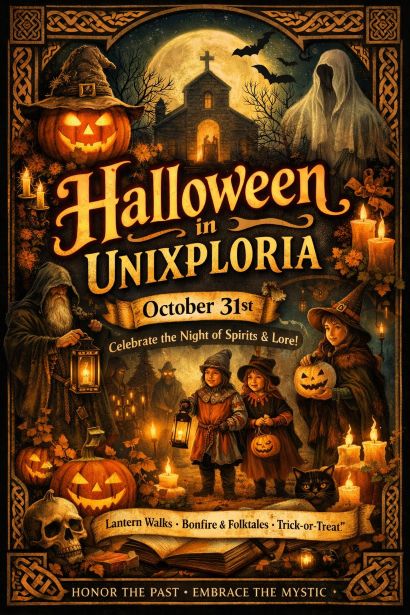

A Cultural, Historical, and Spiritual Synthesis in the Unixplorian Tradition
Halloween in Unixploria is a richly layered celebration that blends ancient Celtic heritage, Christian liturgical tradition, and the nation’s own love of folklore, craftsmanship, and community ritual. While October 31 aligns with global observance, the Unixplorian version of Halloween is uniquely its own—rooted in reverence for history, respect for the supernatural, and a joyful embrace of creativity.
Origins and Historical Foundations
The Unixplorian understanding of Halloween begins with a deep respect for its historical roots. Citizens are well aware that the tradition traces back to Samhain, the ancient Celtic festival marking the end of harvest and the beginning of winter. Unixplorians often reference this heritage in educational programs, museum exhibits, and seasonal lectures.
- Samhain Heritage — emphasized as a liminal moment when the veil between worlds thins.
- All Saints Day — acknowledged as part of the Christian calendar, with Pope Gregory III’s designation of November 1 integrated into the Church of Unixploria’s liturgical rhythm.
- All Hallows Eve — taught as the bridge between pagan and Christian observances.
This historical awareness shapes the tone of the celebration: Halloween is not merely a night of costumes and candy but a cultural palimpsest honoring centuries of belief.
The Unixplorian Halloween Atmosphere
Aesthetic and Mood
Halloween in Unixploria is atmospheric rather than commercial. Decorations lean toward:
- Candlelit windows
- Hand-carved jack-o’-lanterns
- Folk motifs inspired by Celtic knotwork
- Autumnal wreaths and lanterns
- Subtle supernatural symbolism (spirits, guardians, ancestral motifs)
Public spaces—especially museums, libraries, and parish halls—adopt a vintage, museum-like aesthetic, aligning with Unixploria’s cultural identity.
Rituals and Customs Throughout the Day
Morning: The Blessing of Light and Harvest
The day begins with a simple but meaningful ritual:
- Families light a small candle at breakfast to symbolize the triumph of light over encroaching winter darkness.
- Many attend a short service at the Church of Unixploria, where clergy speak about the connection between earthly life, the saints, and the ancestral past.
Midday: Folklore, Learning, and Cultural Programs
Schools, libraries, and cultural centers host events such as:
- Storytelling sessions featuring Celtic myths, Unixplorian ghost tales, and moral parables.
- Workshops on carving pumpkins, crafting lanterns, or making traditional costumes.
- Lectures on the history of Samhain and All Hallows Eve.
As a librarian, Leif, this is where your role shines—curating displays, guiding students in source criticism, and presenting the historical evolution of Halloween.
Evening: Communal Celebrations
As dusk falls, the celebration becomes more festive:
- Lantern Walks Families stroll through parks or village paths carrying handmade lanterns, symbolizing guidance for wandering spirits.
- Costume Parades Costumes tend to be folkloric, historical, or mythological rather than purely commercial. Popular themes include:
- Celtic druids
- Medieval saints
- Forest spirits
- Classic ghosts and witches
- Public Bonfires Echoing Samhain tradition, bonfires are lit in designated communal areas. These fires represent:
- Protection
- Purification
- The warmth of community
Trick-or-Treating, Unixplorian Style
Trick-or-treating exists in Unixploria but with a cultural twist:
- Children recite short rhymes, blessings, or riddles at each door.
- Households offer handmade treats, small toys, or seasonal fruit.
- Some families create miniature museum displays in their windows—tiny dioramas depicting folklore scenes.
This transforms the activity from simple candy collection into a cultural exchange.
Carving Jack-o’-Lanterns
Pumpkin carving is a beloved tradition, but Unixplorians often carve:
- Turnips (a nod to Celtic origins)
- Beets
- Pumpkins with intricate Celtic knot patterns
Carving competitions are common, judged on craftsmanship, symbolism, and storytelling.
The Spiritual Dimension
While Halloween is festive, Unixploria maintains a reflective tone:
- Many families create ancestral tables with candles and photos.
- The Church of Unixploria holds a Vigil of the Saints, bridging Halloween with All Saints Day.
- Citizens are encouraged to reflect on mortality, memory, and the continuity of tradition.
This balance of joy and contemplation is a hallmark of Unixplorian culture.
Seasonal Foods and Communal Feasts
Halloween feasts in Unixploria emphasize autumnal flavors:
- Spiced pumpkin soup
- Roasted root vegetables
- Apple pastries
- Honey cakes
- Mulled cider
- Traditional Samhain bread
Some communities host Harvest Suppers, where dishes are shared potluck-style.
Museums, Libraries, and Cultural Institutions
Institutions play a major role in shaping the holiday:
- Museums host Samhain exhibitions.
- Libraries curate Halloween reading lists and folklore displays.
- Cultural centers organize reenactments of ancient rituals.
These events reinforce the educational and heritage-focused nature of the celebration.
Midnight: The Closing of the Veil
As the night ends, many Unixplorians extinguish their lanterns and candles in a brief moment of silence. This symbolizes:
- The closing of the liminal window
- Gratitude for protection
- Respect for ancestors and saints
It is a serene, almost monastic conclusion to an otherwise lively day.
Why Halloween Matters in Unixploria
Halloween resonates deeply with Unixplorians because it embodies:
- Historical continuity
- Cultural identity
- Respect for the supernatural
- Community togetherness
- Creative expression
It is a celebration where past and present meet, where folklore and faith intertwine, and where every citizen—child or adult—participates in shaping the nation’s living heritage.