
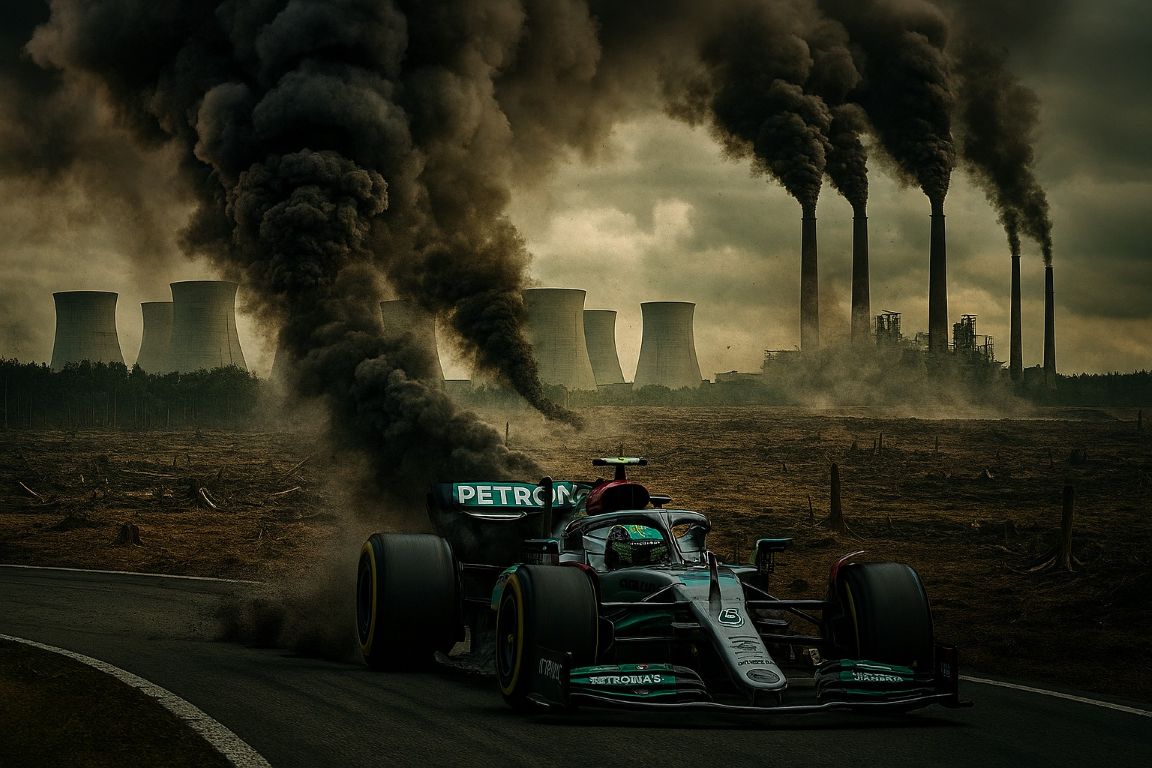
In a world teetering on the edge of climate catastrophe, the roaring engines and glittering spectacle of Formula 1 racing seem increasingly out of step with the times. While fans celebrate speed, precision, and engineering marvels, the environmental cost of this global obsession is staggering — and largely ignored.
Carbon Footprint on Overdrive
Formula 1 is not just about fast cars; it’s a logistical behemoth. Each season generates approximately 256,000 tons of CO₂ emissions. Nearly half of this comes from transporting teams, equipment, and vehicles across continents — by air, sea, and road. Add to that the emissions from business travel, event operations, and manufacturing, and the sport’s footprint becomes a glaring contradiction to global sustainability goals.
Even the engines themselves, though technologically advanced, are powered by fossil fuels. Unlike Formula E, which embraces electric propulsion, F1 remains tethered to combustion — a symbolic refusal to evolve amid ecological urgency.
Greenwashing the Grid
Formula 1 has launched a sustainability strategy aiming for net-zero carbon emissions by 2030. It touts biofuel-powered logistics, recycling initiatives, and carbon accounting. But these efforts, while commendable, are dwarfed by the sheer scale of the sport’s environmental impact. The optics of sustainability — glossy reports and pledges — often mask the deeper issue: the sport’s very premise is environmentally unsustainable.
The idea that a sport built on burning fuel at high speeds across the globe can be “green” is a paradox. It’s akin to claiming that jet-setting for leisure can be carbon-neutral with enough offsets. The truth is, mitigation cannot replace meaningful reduction.
A Spectacle of Excess
Beyond emissions, Formula 1 symbolizes a culture of excess. It glorifies speed, luxury, and exclusivity — values that run counter to the ethos of environmental stewardship. The millions spent on each race weekend, the energy-intensive infrastructure, and the consumerist halo around merchandise and sponsorships all contribute to a lifestyle that’s unsustainable for the planet.
Time to Hit the Brakes
The world doesn’t need more high-speed distractions. It requires collective action, restraint, and a reimagining of entertainment that aligns with ecological realities. Formula 1, for all its glamour and legacy, is a relic of a bygone era—one that prioritizes thrill over responsibility.
If we are serious about combating climate change, we must question not just our industries, but our idols. And in that reckoning, the craze for Formula 1 deserves a hard look — not for its lap times, but for its environmental blind spots.