

Hermann Göring’s passion for model railways was not a harmless eccentricity but a revealing window into his personality, his need for theatrical self‑glorification, and the broader culture of excess that defined Carinhall — his sprawling forest estate northeast of Berlin. The historical record shows that Göring built one of the largest and most elaborate model railway systems of the 1930s, a miniature world engineered to impress guests, reinforce his self‑image, and mirror the authoritarian order he demanded in real life.
A miniature empire at Carinhall
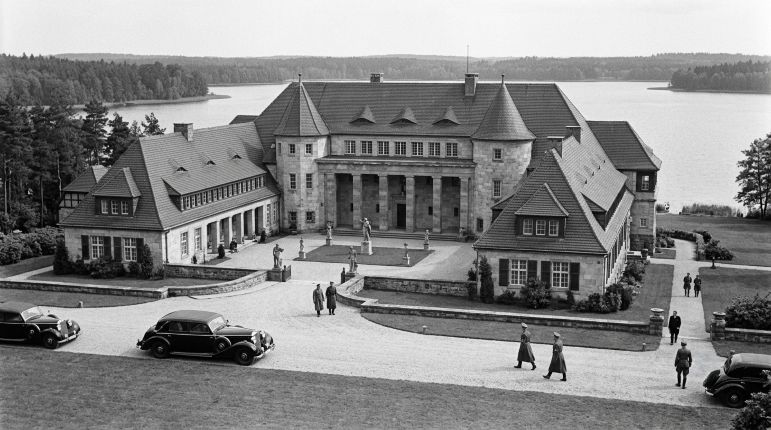
Carinhall was never a modest hunting lodge. It was a stage set for Göring’s ego: halls lined with stolen art, exotic animals, and grand architectural flourishes. Within this environment, the model railway became another curated symbol of power. According to research and surviving photographs, Göring constructed a vast Märklin-based layout — large enough to be insured for $254,000 in 1930s money, equivalent to well over $1 million today.
The Library of Congress holds photographs from 1937 and 1938 showing Göring and Adolf Hitler watching the model trains run at Carinhall. These images confirm that the railway was not a private hobby but a performative spectacle used to entertain and impress high-ranking visitors.
The scale and complexity of the layout
Although many details were destroyed along with Carinhall in 1945, surviving documentation and later research indicate:
- Multiple interconnected layouts — not just one system, but several rooms of track, scenery, and mechanical features.
- High-end Märklin equipment — the premier German manufacturer of model railways at the time.
- Custom-built scenery — tunnels, bridges, stations, and landscapes designed to evoke a romanticized German countryside.
- Operational complexity — trains running in and out of tunnels, over viaducts, and through detailed miniature towns.
Researchers who have pieced together photographs, insurance documents, and personal accounts emphasize that Göring’s railway was among the largest private model train installations in Europe before the war.
Why Göring built it: ego, theater, and control
Göring’s personality — corpulent, flamboyant, theatrical, and obsessed with grandeur — shaped every corner of Carinhall. His model railway fit perfectly into this pattern.
Several motives emerge from historical analysis:
- A stage for self‑presentation Carinhall was designed to impress. The railway allowed Göring to play the role of benevolent ruler over a perfectly ordered miniature world.
- A symbol of control In Göring’s model kingdom, everything ran on time because he commanded it. This mirrored the authoritarian fantasies he projected in real life.
- A diversion and vanity project Like his hunting trophies, stolen art, and lavish uniforms, the railway was another indulgence meant to reinforce his cultivated image as a Renaissance man — an image deeply at odds with the brutality of the regime he served.
- A tool for entertaining dignitaries Guests were routinely shown the layout as part of the Carinhall experience. It was a spectacle, not a private retreat.
The railway within the culture of looting and excess
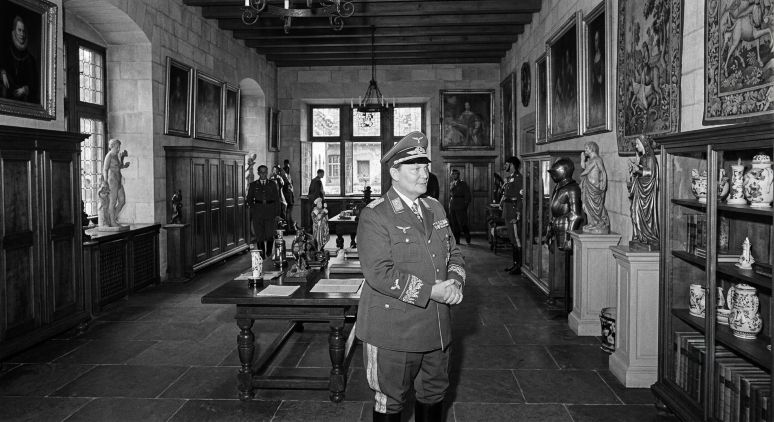
Göring’s passion for collecting extended far beyond model trains. He amassed enormous quantities of stolen art — Greek statues, Rembrandts, tapestries, and more — taken from museums and private collections across occupied Europe.
The model railway existed within this broader context of:
- Looted luxury
- Grandiose self‑mythologizing
- Performative hospitality
- Architectural expansion and spectacle
Carinhall was a curated fantasy world, and the railway was one of its most elaborate attractions.
Destruction and disappearance
When the Red Army approached in 1945, Göring ordered Carinhall destroyed to prevent its capture. The model railway — like much of his stolen art collection — was obliterated or scattered. Some rumors suggest fragments may have survived, but no verified portion of the layout is known to exist today.
Legacy: a strange footnote in a dark history
Hermann Göring was a leading figure in the Nazi regime, responsible for immense suffering, war crimes, and human rights violations. His model railway, while superficially whimsical, reflects the same impulses that shaped his political life: domination, spectacle, and self‑aggrandizement.
Historians now view the Carinhall railway not as a charming hobby but as part of the grotesque theater of power surrounding one of the most destructive figures of the 20th century.
Hermann Göring’s Carinhall Collections: A Monument to Theft, Vanity, and Power
Carinhall — Göring’s palatial estate in the Schorfheide forest — was not merely a residence. It was a curated world built to glorify its owner. Every hall, every gallery, every cabinet was filled with objects meant to project cultural authority, aristocratic refinement, and absolute dominance. The collections Göring assembled there were vast, meticulously arranged, and overwhelmingly stolen.
Carinhall became one of the largest private art repositories in Europe during the Second World War, a grotesque museum of looted heritage.
I. The Scope of Göring’s Collections
Historians estimate that Göring acquired thousands of artworks and artifacts, ranging from Old Masters to medieval weapons, from tapestries to rare furniture. His collecting spanned multiple categories:
1. Fine Art
- Paintings by Rembrandt, Rubens, Van Dyck, Botticelli, Cranach, and other major European masters.
- Entire collections were seized from Jewish families, museums, and occupied territories.
- Works selected personally from the ERR (Einsatzstab Reichsleiter Rosenberg), the Nazi looting organization.
2. Sculpture and Antiquities
- Greek and Roman statues.
- Renaissance bronzes.
- Medieval religious carvings.
- Decorative stonework removed from churches and estates.
3. Tapestries and Textiles
- Massive Flemish tapestries used to decorate Carinhall’s halls.
- Rare carpets and embroidered wall hangings.
4. Furniture and Decorative Arts
- Baroque and Rococo furniture.
- Porcelain collections (Meissen, Sèvres).
- Silverware, clocks, and ceremonial objects.
5. Hunting Trophies and Natural Collections
- Exotic animal mounts.
- Rare pelts and horns.
- Ornamental weapons and hunting gear.
6. Model Railways and Mechanical Curiosities
- A sprawling Märklin railway system.
- Mechanical toys, automata, and engineering novelties.
Each category was enormous in scale. Carinhall was not a home — it was a warehouse of cultural plunder.
II. The Dark Provenance: Theft as State Policy
Göring’s collections were built through:
Systematic Looting
He personally oversaw seizures from:
- Jewish collectors forced to “sell” under duress.
- Museums in France, Belgium, the Netherlands, Poland, and beyond.
- Private estates confiscated during the occupation.
He visited the Jeu de Paume museum in Paris — the central depot for stolen art — over twenty times, selecting masterpieces like a shopper browsing a catalog.
Coercion and Extortion
Families fleeing persecution were forced to surrender artworks to secure exit visas or avoid deportation.
State-Sanctioned Theft
Göring used his position to:
- Redirect art intended for Hitler’s planned Linz museum.
- Claim “first choice” rights on all seized cultural property.
- Deploy the Luftwaffe to transport stolen works.
The provenance of Carinhall’s treasures is inseparable from the suffering of those who lost them.
III. How Göring Organized and Classified His Collections
Despite his flamboyant public persona, Göring was methodical in private. Carinhall’s collections were arranged with obsessive care.
1. The Gallery System
Carinhall featured:
- Long corridors lined with paintings arranged by school (Dutch, Flemish, Italian).
- The Great Hall, where large canvases and tapestries were displayed.
- Private salons for his favorite works.
He employed curators and art experts to catalog acquisitions, though he often overruled them in favor of his personal taste.
2. The Inventory Books
Göring kept:
- Detailed ledgers listing each artwork.
- Notes on provenance (often falsified).
- Insurance valuations.
- Acquisition dates and ERR transport numbers.
These books later became crucial evidence in postwar restitution efforts.
3. Thematic Rooms
Carinhall included:
- A Hunting Room filled with trophies and medieval weapons.
- A Renaissance Chamber for Italian masters.
- A Dutch Gallery for Rembrandt and contemporaries.
- A Railway Room for his model trains.
4. Rotating Displays
Göring frequently rearranged rooms to impress visitors. He treated Carinhall like a living museum, constantly curated for maximum theatrical impact.
IV. The Time He Spent with His Collections
Göring devoted extraordinary amounts of time to his treasures:
Daily Walkthroughs
He toured the galleries almost every day, often alone, sometimes with guests. These walks were ritualistic — a way to bask in his own grandeur.
Evening Viewings
He enjoyed showing off new acquisitions during dinners or receptions, lecturing guests on art history with exaggerated confidence.
Hands-On Engagement
He:
- Personally supervised the placement of major works.
- Adjusted lighting and furniture to enhance displays.
- Spent hours with his model railway, demonstrating its features to visitors.
Collector’s Correspondence
He maintained constant communication with:
- Art dealers.
- ERR officials.
- Museum directors.
- Agents in occupied territories.
His collecting was not a hobby — it was a full-time pursuit intertwined with his political power.
V. Carinhall as a Stage for Power
Everything Göring collected served a political purpose:
1. Cultural Legitimacy
He wanted to appear as a refined aristocrat, a patron of the arts, a man of taste.
2. Personal Mythmaking
Carinhall was designed to portray Göring as:
- A Renaissance prince.
- A master hunter.
- A guardian of German culture.
3. Intimidation
Visitors were overwhelmed by the scale of the collections. The message was clear: Göring could take anything he wanted.
4. Escapism
His collections provided a fantasy world where he could retreat from the realities of war and the crimes he orchestrated.
VI. The End of Carinhall
As the Red Army advanced in 1945, Göring ordered Carinhall destroyed. He preferred obliteration to the humiliation of seeing his treasures captured.
Some artworks were evacuated; many were lost. The model railway, the tapestries, the furniture — most vanished in the explosion or in the chaos that followed.
Carinhall became a ruin, and its collections became symbols of cultural theft on an unprecedented scale.
A Museum of Plunder
Hermann Göring’s collections at Carinhall were not expressions of taste or creativity. They were monuments to theft, coercion, and the abuse of power. Their organization, scale, and theatrical presentation reveal a man obsessed with grandeur and control — a man who used culture as a weapon and a trophy.
Carinhall stands today as a cautionary tale: a reminder of how cultural heritage can be exploited, stolen, and destroyed by those who wield power without conscience.