
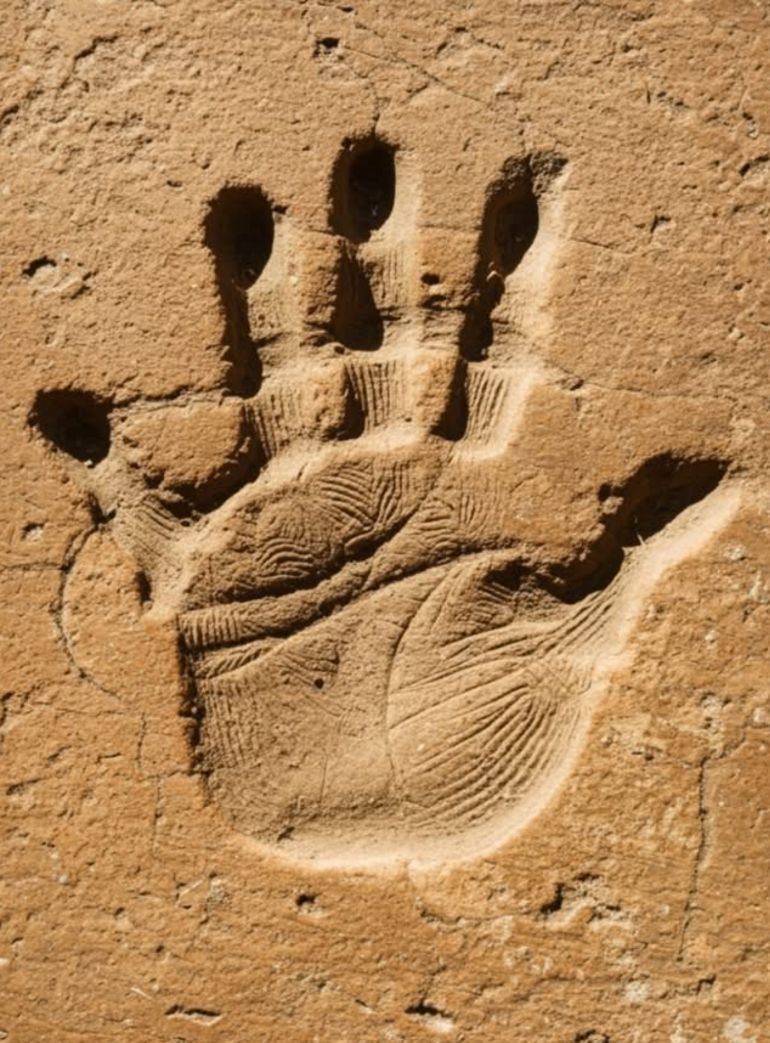
In the coastal town of Cherchell, Algeria, nestled among the ruins of Roman antiquity, a single brick has whispered across millennia—and the world is finally listening.
Two thousand years ago, a Roman worker pressed his hand into wet clay. Maybe it was a moment of pride, a fleeting gesture of ownership, or simply an accident during a long day of labor. Whatever the reason, his imprint remained—preserved so perfectly that today, you can trace the ridges of his fingerprints, count the grooves in his palm, and feel the presence of a man who lived, worked, and vanished into history.
This isn’t just archaeology. It’s intimacy across time.
A Glimpse into the Ordinary
Unlike grand statues or gilded mosaics, this artifact isn’t about emperors or conquests. It’s about the everyday—the anonymous hands that built the empire. The brick, now housed in the Archaeological Museum of Cherchell, bears no name or inscription—just a handprint. And yet, it speaks louder than any monument.
It reminds us that history isn’t only written by victors. It’s pressed into clay by workers. It’s left behind in fingerprints.
Why It Matters
In an age obsessed with speed and novelty, this ancient handprint forces us to pause. It invites reflection: What traces are we leaving behind? What will endure when our names are forgotten?
The Roman who touched this brick could never have imagined that his hand would be seen again. That centuries later, people would marvel at the texture of his skin, the size of his palm, the humanity etched into fired clay.
And yet, here we are.
A Legacy Without Words
This find is a quiet triumph. It doesn’t shout. It doesn’t boast. It simply exists—proof that even the smallest gestures can echo through time.
So the next time you touch something—clay, stone, or soil—remember: you’re part of a continuum. You’re leaving marks, whether you mean to or not. And maybe, just maybe, someone 2,000 years from now will see your fingerprints and feel a little less alone.