
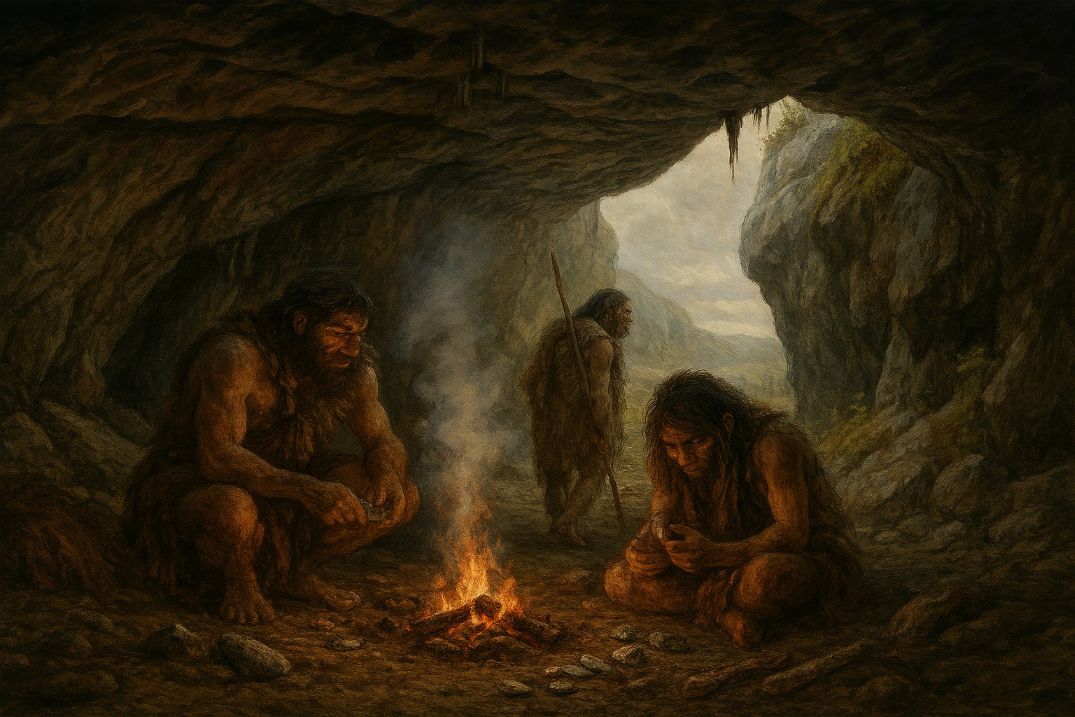
Deep within the rugged terrain of western Finland lies a fissure in the Pyhävuori mountain that has stirred both scientific curiosity and historical debate. Known as Wolf Cave—or Varggrottan in Swedish and Susiluola in Finnish—this site may hold the key to understanding the earliest known human presence in the Nordic region.
Location and Discovery
Wolf Cave is located near the border of Kristinestad and Karijoki municipalities in Finland. In 1996, plans to transform the cave into a tourist attraction took a dramatic turn when archaeologists uncovered stone tools and other artifacts buried within its soil-packed interior. These findings sparked a major excavation effort that lasted several years, led by institutions including the National Board of Antiquities and the University of Helsinki.
A Glimpse into the Paleolithic Past
The cave’s contents suggest it may have been inhabited between 75,000 and 130,000 years ago, during the Middle Paleolithic period. If confirmed, this would make Wolf Cave the oldest known human dwelling in Scandinavia, and the only site in the Nordic countries with potential Neanderthal artifacts.
Among the discoveries:
- Over 200 stone tools, including scrapers and bolt stones
- Around 600 pieces of strike waste
- Heated stones, possibly from open fires
- Tools made from non-local materials like quartzite and siltstone, indicating travel or trade
Controversy and Scientific Debate
Despite the excitement, the site remains a source of controversy. Some archaeologists question whether the artifacts are truly man-made or simply the result of natural geological processes. Others argue that the cave’s location—possibly underwater during the time of supposed habitation—makes human settlement unlikely.
Still, proponents of the Neanderthal theory point to the tool-making techniques, which resemble those found in other Middle Paleolithic sites across Europe. If validated, Wolf Cave would not only rewrite the timeline of human migration into the north but also expand our understanding of Neanderthal adaptability in harsh climates.
Cultural and Historical Significance
Beyond its archaeological importance, Wolf Cave is steeped in Finnish folklore. Caves in the region have long been associated with spirits, rituals, and legends. Today, the Wolf Cave Information Center in Karijoki offers exhibitions that explore both the scientific and mythological dimensions of this enigmatic site.
Why It Matters
Wolf Cave challenges long-held assumptions about early human settlement in northern Europe. It suggests that Neanderthals—or possibly even earlier hominins—may have ventured much farther north than previously believed. Whether or not the debate is ever fully settled, the cave remains a symbol of the deep and mysterious roots of human history in the Nordic lands.