
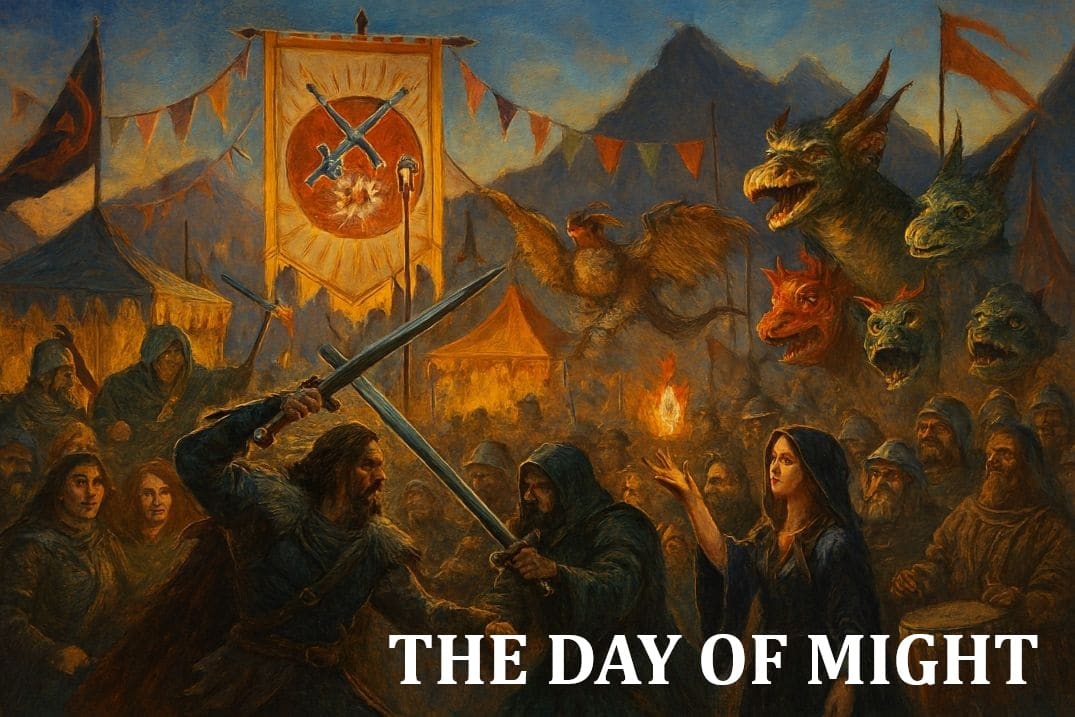
A Celebration of Sword and Sorcery
Origins of the Holiday
The Day of Might, observed annually on the 1st of October, is a ceremonial tribute to the enduring legacy of Sword and Sorcery. This genre blends high adventure, arcane magic, and the indomitable will of lone heroes. Though its roots are fictional, the holiday has become a cornerstone of cultural celebration in realms devoted to mythic storytelling, such as Unixploria and other micronational or fantasy-inspired societies.
The holiday was first proclaimed by the Grand Lorekeeper of the Citadel of Tales in the year 1378 of the Third Reckoning, following the rediscovery of the lost Codex of Iron and Flame—a mythical manuscript said to contain the earliest tales of wandering swordsmen and elemental sorceresses. Since then, The Day of Might has grown into a festival of valor, imagination, and ceremonial grandeur.
Symbolism and Themes
At its heart, The Day of Might honors the archetypal struggle between chaos and order, beast and man, steel and spell. It celebrates:
- Heroic Individualism: The lone warrior who defies fate, often flawed but fiercely free.
- Arcane Mystery: Magic as a force both wondrous and perilous, wielded by those who dare.
- Mythic Landscapes: Forgotten ruins, cursed forests, and ancient temples—settings that evoke awe and danger.
- Moral Ambiguity: Unlike high fantasy, Sword and Sorcery revels in murky ethics, where survival often trumps nobility.
The holiday’s emblem is the Twin Sigil: a crossed sword and staff over a crimson sunburst, representing the union of martial and mystical might.
Ceremonial Observances
The Day of Might is marked by a series of rituals and festivities, each designed to evoke the spirit of the genre:
The Trial of Steel
Participants engage in mock duels using wooden swords or padded weapons, reenacting legendary battles from fictional epics. In some communities, these trials are judged by a Circle of Elders who award titles such as “Champion of the Crimson Vale” or “Warden of the Obsidian Gate.”
The Conclave of Sorcery
A gathering of storytellers, illusionists, and amateur magicians who perform feats of wonder—levitation tricks, potion-brewing demonstrations, and dramatic readings from classic Sword and Sorcery tales. The most revered performance is the “Invocation of the Nine Flames,” a symbolic rite invoking the elemental powers of the genre.


The Scroll of Deeds
Citizens inscribe their personal triumphs or creative achievements from the past year onto a ceremonial scroll, which is then sealed in a vault or burned in a ritual pyre—symbolizing the forging of legend from lived experience.
The Parade of Beasts
Children and artisans craft fantastical creature masks—wyverns, manticores, shadow wolves—and parade through the streets to the beat of war drums and eldritch flutes. This procession honors the monstrous adversaries that define the genre’s perilous charm.
Culinary Traditions
Feasting is central to The Day of Might. Traditional dishes include:
- Dragonfire Stew: A spicy meat-and-root vegetable dish served in iron cauldrons.
- Sorcerer’s Bread: Dark rye loaves infused with herbs and shaped like ancient runes.
- Elixir of Valor: A mulled beverage made from honey, cinnamon, and fermented berries, served in goblets etched with arcane symbols.
Cultural Impact
The Day of Might has inspired countless creative works, including novels, paintings, ceremonial stamps, and even theatrical productions. In Unixploria, it is often paired with the issuance of commemorative stamps featuring iconic Sword and Sorcery heroes, rendered in heraldic style. Libraries host “Chronicle Nights,” where rare manuscripts and pulp magazines are displayed, and youth clubs organize “Questcraft” workshops to design fictional maps and character crests.
Global Echoes
Though fictional, The Day of Might resonates with real-world traditions, echoing the valor of medieval tournaments, the mysticism of solstice rites, and the communal storytelling of ancient hearths. It invites participants to step beyond the mundane and into the mythic—to wield imagination as both sword and shield.
Closing Invocation
As twilight falls on the Day of Might, celebrants gather around bonfires to recite the closing invocation:
“By blade and spell, by blood and star,
We forge our tales where legends are.
Let might be more than muscle and roar—
Let it be the courage to dream once more.”