
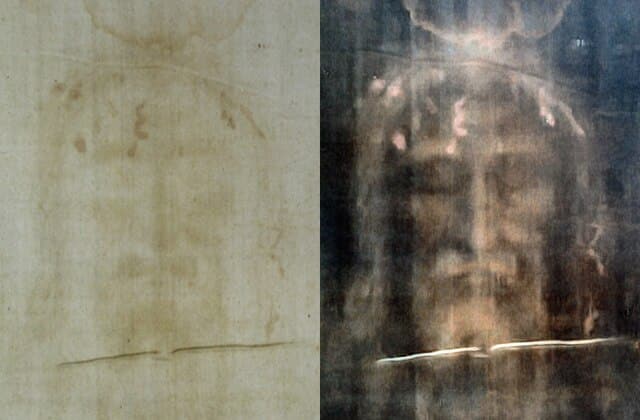
The Shroud of Turin has long captivated believers, skeptics, and scientists alike. This 14-foot linen cloth, bearing the faint image of a crucified man, is believed by many to be the burial shroud of Jesus of Nazareth. In The Body of Proof, Dr. Jeremiah Johnston—a biblical scholar and former skeptic—presents a compelling case that the Shroud is not only authentic but may also capture the very moment of resurrection.
A Scientific Enigma
Johnston highlights that over 600,000 hours of scientific study across 102 disciplines have been devoted to the Shroud. Despite this exhaustive scrutiny, modern science still cannot explain how the image was formed. Key findings include:
- No pigment or dye: The image is not painted or drawn. It is superficially embedded in the fibers of the cloth.
- 3D imaging: The image contains spatial data, allowing for three-dimensional rendering—something no medieval forgery could replicate.
- Energy burst theory: Physicist Paul De Liso calculated that it would take 34,000 trillion watts of energy released in ¼ of a billionth of a second to create the image—a phenomenon no known technology can reproduce.
A Theological Statement in Linen
Johnston argues that the Shroud is more than a relic—it’s a “first-century selfie” of the resurrection. He believes it captures the exact moment Jesus rose from the dead, leaving behind a flash-imprinted image. This, he suggests, is a controlled revelation of Christ tied to divine timing and modern technology.
He also emphasizes the historical accuracy of the crucifixion details on the Shroud, including:
- Wounds consistent with Roman crucifixion
- Bloodstains matching the biblical account
- Anatomical precision of a 1,80 m Jewish male
From Skeptic to Scholar
What makes Johnston’s perspective especially compelling is his journey. Once doubtful of the Shroud’s authenticity, he now asserts the evidence is “beyond all doubt”. His transformation underscores the power of interdisciplinary research—where theology, archaeology, and physics converge.
Final Thoughts
Whether one views the Shroud as a miraculous artifact or a historical curiosity, The Body of Proof invites readers to reconsider the resurrection not just as a matter of faith but as a subject of serious investigation. Johnston’s work doesn’t demand belief—it demands attention.