
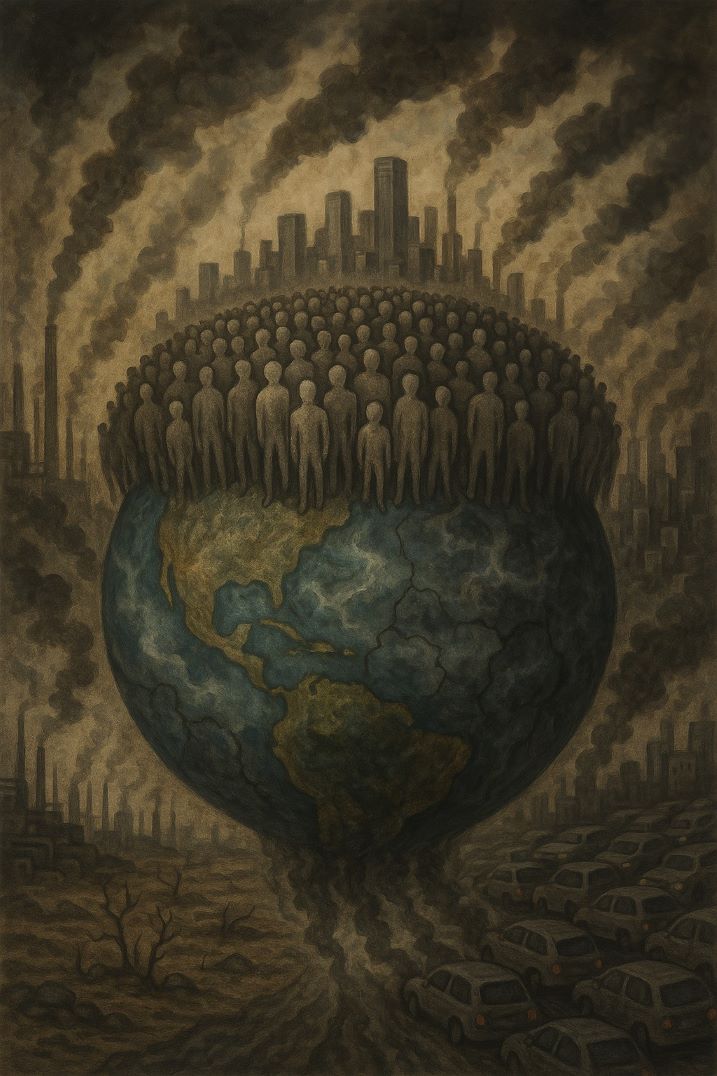
The climate crisis and environmental degradation are no longer distant threats—they’re daily realities. From melting polar ice caps to deadly heat waves and depleted freshwater supplies, the planet is sounding alarms. While technological innovation and policy reform are essential steps toward sustainability, there’s a thorny issue that often gets overlooked or sidestepped: the sheer number of people on Earth.
As of now, there are over 8 billion of us—each contributing, knowingly or not, to rising greenhouse gas emissions, land consumption, biodiversity loss, and water scarcity. That raises a critical question: could a smaller global population ease pressure on the environment?
The Link Between Population Growth and Environmental Strain
- Resource Consumption: More people means greater demand for food, water, energy, and land. Agriculture alone consumes massive amounts of natural resources, and with growing populations, the strain on ecosystems increases.
- Urban Expansion: Forests are cleared for housing. Wetlands are drained. Biodiversity suffers. Larger populations feed urban sprawl, swallowing landscapes that once supported rich natural habitats.
- Waste Production: From plastic waste to carbon emissions, more people produce more pollutants—often beyond what natural systems can absorb or recover from.
- Energy Demand: Even the most optimistic green energy plans will struggle to meet the needs of an ever-growing population without accelerating environmental costs elsewhere.
Population Stabilization Isn’t About Blame—It’s About Balance
Advocating for population reduction isn’t about finger-pointing or enforcing harsh measures. It’s about supporting voluntary, ethical strategies that promote sustainability:
- Investing in universal education—especially for women and girls
- Expanding access to family planning services and healthcare
- Supporting economic stability so people can make informed decisions about family size
- Reimagining consumption habits alongside population trends
These methods aren’t coercive; they’re empowering. They honor human rights while gently shifting long-term population trajectories.
The Power of Interconnection
Reducing the population growth rate won’t magically solve environmental problems. However, it can amplify the effectiveness of other solutions, such as renewable energy adoption, conservation efforts, and sustainable agriculture.
A smaller, more equitable world population could mean fewer emissions, less waste, and a better chance of preserving what’s left of our natural world—for everyone.